Clear acrylic or fabric drawers: which suits what

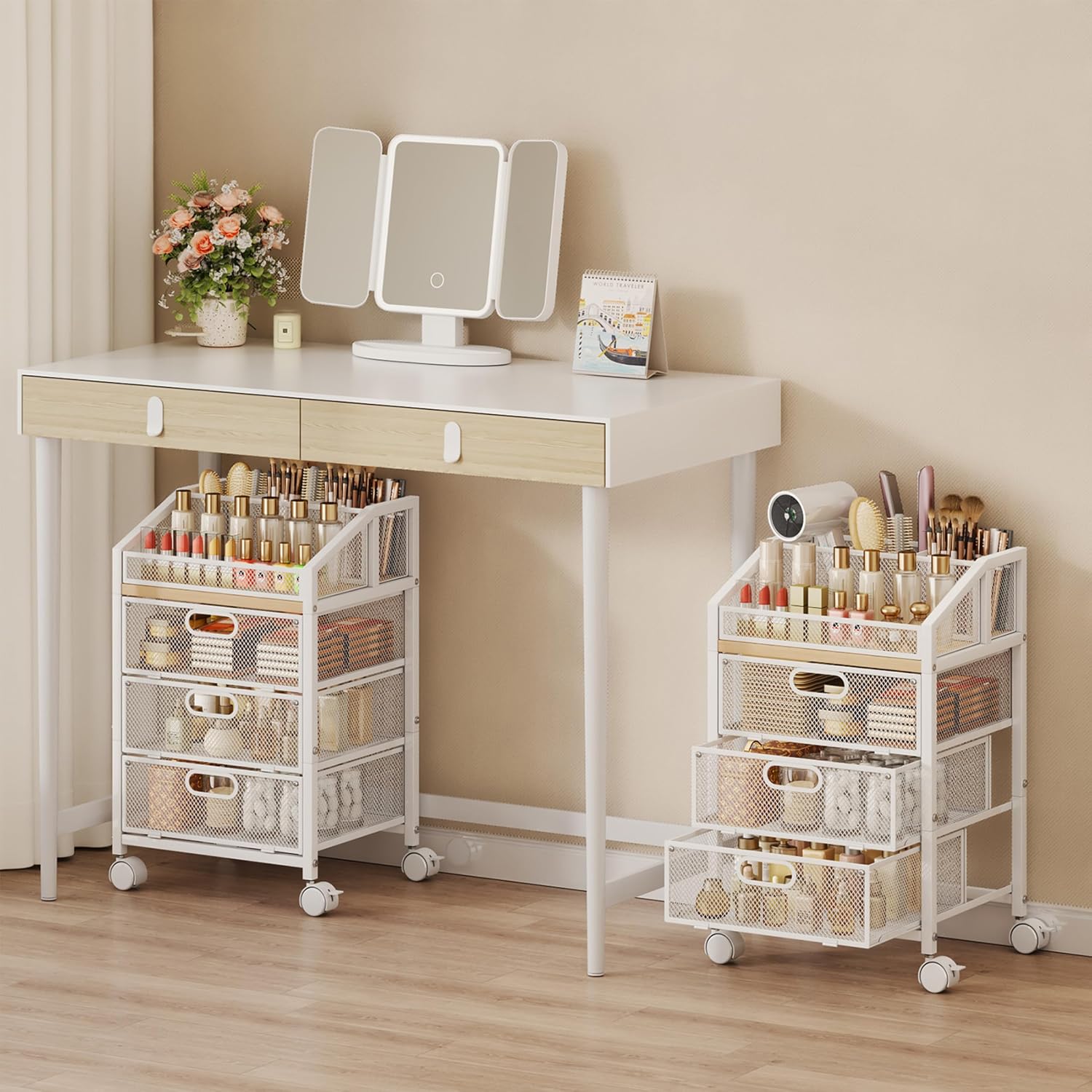
The two dominant materials in this category solve opposite problems. Clear acrylic makes things findable; fabric drawers make things protected and hidden. Choosing badly is not a disaster, but choosing deliberately makes a noticeable difference to whether the system gets used.
Acrylic is for things you choose by sight
The entire argument for clear storage is that you can see what is in it without opening it. For anything you select visually — colours, shades, similar-shaped items that differ only in appearance — that is decisive.
It also enforces tidiness, because untidiness is visible. Some people find that motivating and others find it stressful, and it is worth knowing which you are.
Fabric is for things you want protected
Opaque fabric drawers keep dust off and light out. Light is the more important of the two for anything that degrades, and dust is the more important for anything with a brush or an applicator.
They also hide clutter, which is the honest reason many people prefer them. A fabric drawer can be untidy inside and the room still looks calm.
Dust is the underrated variable
An open tray on a vanity accumulates a surprising amount of dust in a week, and dust on a brush or an open pot is a genuine hygiene issue rather than an aesthetic one. Anything with a lid or a closed drawer solves it.
This is the strongest argument for closed storage over open display for items you actually use daily, as opposed to items you are displaying.
Cleaning: acrylic is easier and scratches more
Acrylic wipes clean in seconds with a soft cloth and warm soapy water. It also scratches easily, and it scratches most from the abrasive cleaners and paper towels people reach for.
Never use anything containing ammonia or alcohol on acrylic. It causes crazing — a network of fine cracks — which is permanent and turns a clear unit cloudy.
Fabric drawers need occasional emptying
They cannot be wiped out with anything in them and most cannot be washed. Emptying and shaking them out every few months is the whole maintenance requirement, and it is the step that gets skipped.
Spills in a fabric drawer are much harder to deal with than spills in acrylic, which is a real consideration for anything liquid.
Durability over a few years
Acrylic is rigid and will crack if dropped or over-tightened; it does not sag. Fabric drawers do not crack but the frames soften over time, and a heavily loaded fabric drawer eventually bows.
For heavy items — bottles, palettes, anything glass — rigid storage is the safer long-term choice.
Mixing the two is usually the answer
Most vanities end up with clear storage on top for the things reached for daily, and fabric or closed drawers underneath for backstock and anything sensitive to light. That division maps onto how the items are actually used.
It also means the visible layer is the one that stays tidy, which is much easier to maintain than tidiness everywhere.
Compartment sizing matters more than material
A drawer with fixed dividers sized for cylinders is useless for palettes, whatever it is made of. Adjustable dividers or a mix of compartment sizes is worth more than the choice between acrylic and fabric.
Check the number and size of compartments against what you actually own before deciding on material.
Cost and where it goes
Acrylic costs more for the same volume because it is heavier to ship and easier to damage in transit. Fabric bins are cheaper and lighter and pack flat, which is most of the price difference.
That transit fragility is why we double-box acrylic. Single-boxed acrylic arrives chipped often enough that it is not worth the saving.
A note on stacking
Acrylic units stack rigidly and stay where they are put. Fabric bins stack only if they have a rigid frame, and soft-sided ones collapse under anything meaningful.
If vertical space is what you are buying, that pushes fairly firmly towards rigid storage regardless of the other considerations.
How each one ages in daily use
Acrylic ages by accumulating fine scratches, which gradually reduce clarity until the unit looks hazy even when clean. That process is slow and it is entirely driven by how it is wiped, so it is largely within your control.
Fabric ages by softening. The frame keeps its shape for a long time and the fabric itself starts to sag against it, which shows first at the drawer fronts. Neither material fails suddenly, and both give plenty of warning.
Which one suits a shared or busy space
In a bathroom shared by several people, opaque drawers do better, because tidiness is not under one persons control and closed storage hides that. Clear storage in a shared space tends to look chaotic within a week however well it was set up.
In a space only you use, the visibility of acrylic is worth more, because the tidiness stays where you put it and finding things quickly is the daily benefit rather than an occasional one.
Storage in stock
- HapiRm Rolling Makeup Cart Organizer – White Under Desk Storage with 3 Drawers — $45.99
- AERCIINC Large Makeup Organizer with Brush Holder & Drawers, Beige — $29.98
- Criusia 8-Pack Clear Acrylic Drawer Organizer Set with Non-Slip Pads — $22.99
- Vtopmart 3-Tier Skincare Organizer with Drawers & Dustproof Lid, White — $21.99
See everything in Cosmetic Organizers.
Choosing between them
Clear acrylic for anything chosen by sight and used daily; opaque drawers for anything you want protected from dust and light, and for backstock. Most vanities want both, arranged in that order vertically.
Questions about anything above? Our FAQ covers the usual ones, the Shipping Policy has the delivery detail, and you can contact us directly — we answer within one business day.